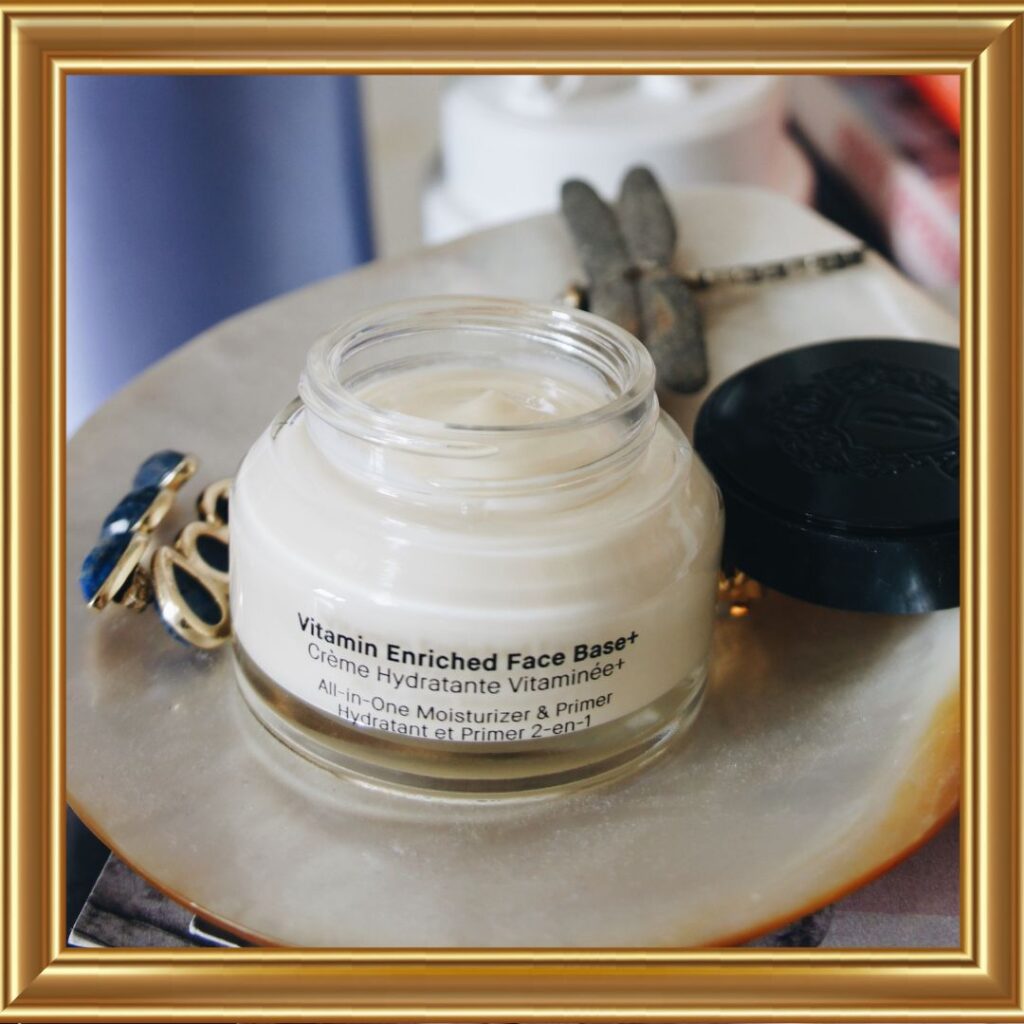
Bobbi Brown’s Vitamin Enriched Face Base has been a cult staple for over two decades—the moisturizer-primer hybrid that built its own fanbase inside a fanbase. So when word came that it was being reformulated into Face Base+, the reaction inside our group chats was less “exciting upgrade” and more “please don’t ruin this.” We went in skeptical. Here’s what we found: what changed, why it changed, and whether it’s still worth your money.
Why reformulating an icon is never just a marketing decision
When a brand touches its single most recognizable product, it’s rarely cosmetic. Face Base has been essentially untouched since launch—it’s Bobbi Brown’s best-known, most-repurchased formula, the kind of product a brand protects rather than tinkers with. A reformulation this deep (five years in development, according to the brand) signals two things at once: the industry is under real regulatory pressure to rebuild “legacy” formulas from the ground up, and no product is exempt just because it’s beloved. If Face Base can change, expect more silicone-heavy staples across the industry to follow.
What actually changed in the formula
The old formula ran on Vitamin B, C, and E, plus two silicones—D5 (cyclopentasiloxane) and dimethicone crosspolymer—responsible for that signature silky glide.
Face Base+ swaps that vitamin lineup for Niacinamide (B3), a new Vitamin C format, and Panthenol (B5) and Vitamin E at five times the previous concentration, plus the addition of Acetyl Glucosamine. Both silicones are gone entirely, replaced with lightweight emollients and texture enhancers designed to recreate that same glide without them.
Functionally, that’s a shift from a formula that just moisturized to one that the brand says now hydrates and moisturizes, in a texture that’s noticeably lighter than before.

Why now: it’s regulation, not a glow-up
This wasn’t reformulation for reformulation’s sake. In May 2024, the EU adopted a restriction on a group of cyclosiloxane silicones that includes D5—the exact silicone in the old Face Base’s ingredient list. These substances are classified as “very persistent, very bioaccumulative” (vPvB), meaning they don’t break down and accumulate in the environment over time. The case against them is environmental: they’re toxic to aquatic life and to some terrestrial plants, and there’s concern about long-range environmental transport — these compounds have been tracked accumulating in remote regions as far as the Arctic. The EU restriction is projected to cut emissions of these substances by up to 90%.
The compliance deadline for leave-on cosmetics is June 2027, with market-placement restrictions starting June 2026. In plain terms: Bobbi Brown had to reformulate to keep selling this product in Europe at all. The vitamin upgrade is the part they built on top of a change they were required to make.
Our honest take, after testing it
We went in ready to be unimpressed. We weren’t. Despite losing both silicones, the glide and smoothing effect held up—the swap to lightweight emollients does the job it’s supposed to. Makeup still sits well on top, the 24-hour priming claim held up in wear tests, and skin looked genuinely plumper and brighter within days. Brand testing backs that up with a claimed 122% immediate hydration boost and a 22% improvement in smoothness after four weeks of use.

It’s still made for the same crowd who loved the original—dry-to-normal skin types who want that rich, buttery finish. If that’s you, Face Base+ reads as a genuine upgrade, not a downgrade dressed up in new packaging.
Should you be hoarding the old formula?
Honestly, no. We understand the instinct—”reformulation” has become a red-flag word in beauty, and stockpiling a discontinued favorite feels like the safe move. But this wasn’t a cost-cutting swap; it was a compliance-driven rebuild that arrived with more active ingredients, not fewer. Testing shows the new formula performs as well as, if not better than, the original. There’s no version of this where holding onto the old Face Base is the smarter play.
The bottom line
Face Base+ is proof that reformulation isn’t automatically a downgrade. This one was forced by an EU regulation on the silicone inside it—and Bobbi Brown used the moment to actually improve the formula rather than just patch around the restriction. Icon status, intact.