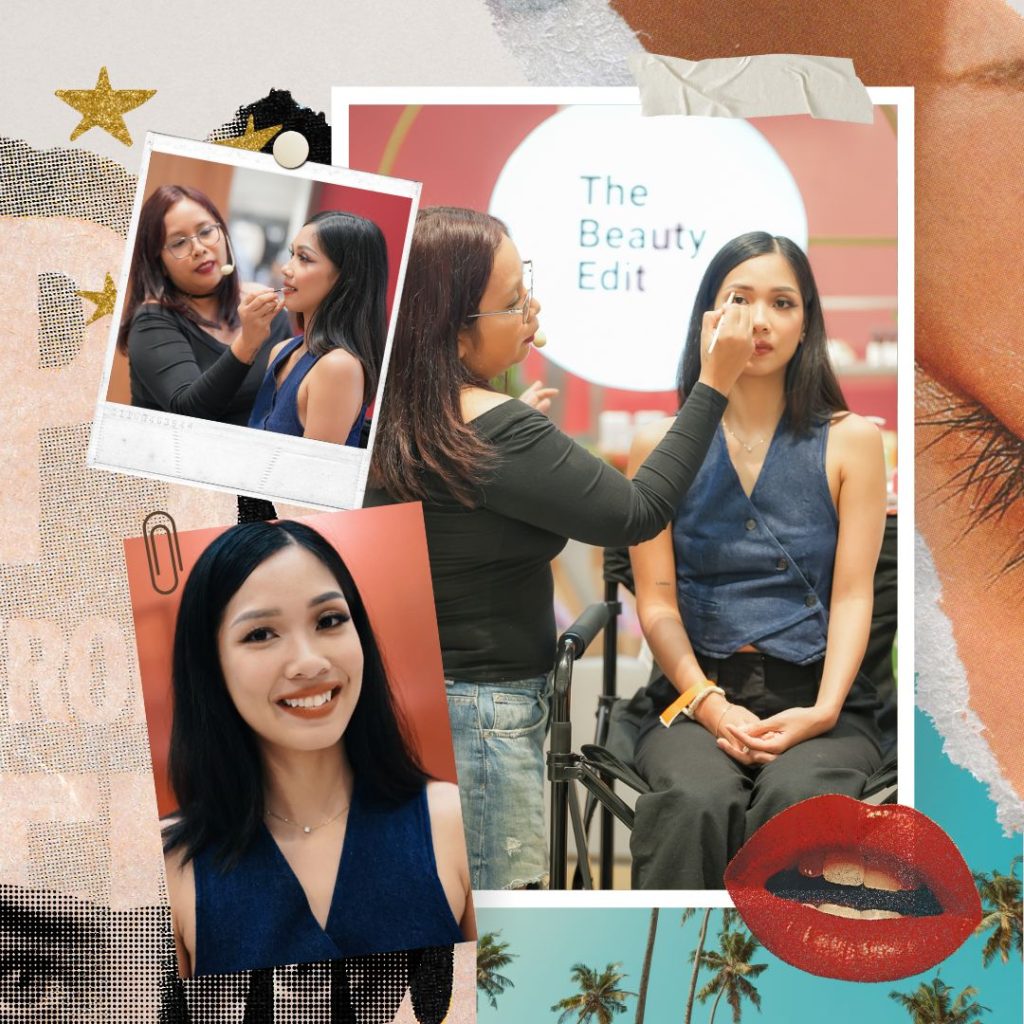
Welcome to Lessons From the Veterans, a series that goes behind the scenes with industry icons. Through their stories, we highlight the defining moments, lessons learned, and guiding principles that have shaped their careers and influenced their industries.
If there’s one thing you learn quickly about Nikki Tang, it’s that she is always in motion.
Over the course of our conversations for this story—spanning calls, chats, and emails—she had flown from Paris to Bangkok to Hong Kong and back again, often for trips lasting only a few days. When we finally spoke via call on Instagram (very 2026 of us), we were surprised to learn she was already back in Manila. Just hours earlier, her Instagram stories had shown her arriving in Hong Kong.
“I’m usually in and out,” she says, confirming that she really does travel a lot. “Ninety-five to 98 percent of it is work.” Still, she tries to carve out pockets of leisure—even if it’s just a few hours to wander or observe a city.
Europe, she explains, is practically a second office. Many of her companies’ principals and brand partners are based there. The U.S. calls at least once a year. And Asia is a constant loop. These aren’t casual visits—they’re strategic pilgrimages to the headquarters, laboratories, and boardrooms of innovators shaping the future of dermatology and aesthetic medicine. Because when Nikki travels, she isn’t simply attending meetings. She’s sourcing the future of beauty for the Philippines.
As founder and CEO of DMark Beauty (established in 1998) and DermAsia (founded in 2004), Nikki stands behind two of the country’s most influential companies in the dermatology and aesthetic space. DMark Beauty is a leading distributor of globally respected, physician-dispensed skincare brands such as Neostrata, Bioderma, Heliocare, Iraltone, and more—names trusted by dermatologists and clinics nationwide. DermAsia, meanwhile, brings in cutting-edge aesthetic devices and restoration technologies used by many of the country’s best clinics, both big and small.
Together, these two companies don’t just follow trends; they define the standards by which local beauty evolves. And yet surprisingly, Nikki was never the stereotypical beauty-obsessed girl.
“It might be embarrassing to admit, but hindi talaga ako kikay as a young girl,” she shares. (“I really wasn’t a ‘girly girl’ growing up.”) Instead of makeup, she was more attuned to the idea of maintaining healthy skin.

That awareness traces back to her grandmother, now in her mid-90s, who practiced self-care long before it became a hashtag. “She would always tell me, ‘You can’t leave the house without lipstick.’” A classic lola rule, yes, but beneath it was a deeper philosophy. Her grandma’s skin, Nikki recalls, was always beautiful—not because of trends or treatments, but because of consistency and care. And so from an early age, Nikki understood that beauty was about maintenance, discipline, and respect for oneself.
A graduate of Business Manufacturing Engineering and Management from De La Salle University, Nikki’s early career included a stint in healthcare—particularly in the dental field—and even marketing copper bracelets popular among golfers. Truth be told, beauty wasn’t the plan. It arrived almost by accident.
In the late ’90s, anti-aging was just beginning to enter the mainstream conversation. “Back then, it was all about peeling—chemical peels,” she recalls. Neostrata and Obagi were among the buzziest names, and Botox and lasers were just entering the scene.
Her mother, who regularly visited dermatologists in Manila and Singapore, kept hearing the same thing: certain breakthrough products were unavailable locally. Or if they were, they weren’t properly marketed or distributed. “She just asked me to look into it,” Nikki says simply. That inquiry led to the founding of DMark Beauty in 1998, beginning with Neostrata, one of the pioneering brands in anti-aging—specifically skin-renewing acids. “And the rest is history.” DermAsia followed a few years later, expanding her vision from skincare to the technologies transforming clinics.
Luckily, entrepreneurship was never a foreign language to Nikki. She grew up in a Chinese family in Binondo, where business was simply part of daily life. Her grandfather, an immigrant, started as a small vendor—building everything through patience, resilience, and discipline.
“I didn’t grow up calling it entrepreneurship,” she says. “It was just how life worked.” In their household, you observed negotiations at the dinner table, long hours, calculated risks. “You’re exposed early to discipline and responsibility. That becomes instinct.” As a child, she was curious about pricing, value, and efficiency. She liked organizing, selling small things, and figuring out how to improve systems. “It wasn’t about money,” she clarifies. “It was about independence, accountability, problem-solving.”
That mindset still anchors her today. With numerous industry recognitions under her belt, Nikki Tang is often seen as the consummate beauty CEO: efficient, polished, always composed. But spend a little time with her, and you’ll find unexpected layers.
“Not a lot of people know this, but I’m actually into geopolitics,” she shares. Instead of endlessly scrolling through TikTok beauty trends, she keeps up with global affairs and current events. She loves music, dancing, and indulges in two to three massages a week. A mother to two grown sons, she also greatly treasures quiet time with family and has a particular love for fragrance. “I’m more of a fragrance person than a makeup person,” she reveals.
Clearly, there is more to Nikki Tang than boardrooms and brand launches.
In this interview, she opens up about building businesses before beauty was mainstream, navigating change in an always-evolving industry, and the learnings that keep her steady—even when the pace never slows.
The Beauty Edit: Let’s go back to 1998 when you first established DMark. You were so young. What were you thinking back then?
Nikki Tang: I was in my early 20s—young enough to be fearless and honest enough to admit I didn’t have everything figured out. Back then, I wasn’t thinking about scale or legacy yet. I was thinking about survival, learning, and proving to myself that I could build something of my own. Looking back now, that leap wasn’t about confidence; it was about courage. Sometimes you don’t wait until you’re ready. You grow into readiness.
Growing up around entrepreneurs, what values or habits stuck with you as you built your own business?
My grandfather started as a small vendor. Growing up, I didn’t fully understand the weight of that journey, but I could see the discipline and humility it created in our family. It shaped how I see business today—not as something glamorous, but something built day by day, relationship by relationship. His story reminds me that dignity in hard work is the real inheritance, and that whatever we build should outlive us.
“Business humbles you quickly. It forces you to grow, whether you’re ready or not.”—Nikki Tang, CEO of DMark Beauty and DermAsia
Who or what would you consider your biggest teacher?
Experience. And failure. No book, no mentor, no seminar replaces lived mistakes. Every wrong hire, every cash-flow scare, every partnership that didn’t turn out the way I hoped, those were my teachers. I learned the most from moments when I had to sit alone with the consequences of my decisions and still show up the next day steady for my team.
Business humbles you quickly. It forces you to grow, whether you’re ready or not.
Was there a skill you had to learn on the job that didn’t come naturally to you, but proved essential over time?
Letting go. I’m naturally hands-on and deeply invested. Learning to trust others, delegate properly, and not equate control with care took time. Leadership isn’t doing everything yourself—it’s building people who can do things well and allowing them space to grow.
You’re running DMark and DermAsia with your sibling, Charles Mandy. What’s it really like? Any lessons you’ve learned about mixing family and business?
Working with family is both a gift and a responsibility. It’s not always easy because business decisions and personal emotions can overlap. But there’s also a deeper level of trust and shared purpose. At the end of the day, we remind ourselves that relationships matter more than being right. The business can grow only if the family grows too.
With so many new beauty fads popping up, how do you decide what’s actually worth following?
I ask one question: Does it add long-term value? If it’s backed by science, improves outcomes, and respects the professional ecosystem, I pay attention. If it’s noise or purely aesthetic hype, I let it pass. Longevity comes from discernment, not speed.
Can you share a new product or technology you’re excited about bringing to clinics and patients?
One of the most exciting developments we’re bringing in is Fagron’s genomics and genetic testing. This allows doctors to move beyond a one-size-fits-all approach and truly personalize treatments—from skin and hair concerns to overall wellness. It’s a shift toward precision medicine in aesthetics, and I believe this will play a significant role in how the industry evolves in the coming years.
For DermAsia, I’m proud of the advanced aesthetic technologies we bring to the market—platforms that prioritize efficacy, safety, and clinic efficiency. Technologies from Lumenis, Asclepion, and Alma Lasers, alongside systems like Geneo, AviClear, and LED-based therapies, support modern aesthetic practices by offering effective, non-invasive solutions for skin rejuvenation, acne management, and post-procedure recovery.
Ultimately, I only stand behind products and technologies I would confidently recommend to my own family and closest friends. If it doesn’t respect the patient, support the doctor, and deliver results over time, it simply doesn’t belong in our portfolio.
DermAsia works with the biggest clinics in the country. How do you maintain strong relationships with all of them while staying neutral and unbiased?
It’s not always easy—there’s no one-size-fits-all formula. But it starts with truly understanding and respecting each clinic’s goals and business needs. These companies, of course, know their target market best and how they want to position themselves. For us, we act not just as a distributor, but as a partner. We provide the right technology, service, and support so they can deliver the best results for their patients. That means being reliable, consistent, and fair—without showing favoritism.
Open communication, meeting halfway, and aligning on objectives are key. At the end of the day, there’s no “winner”—it’s about building long-term collaborations that benefit everyone, and maintaining credibility is essential for that.
All our clients are important; there’s no “big” or “small.” That mindset is what helps us sustain relationships and continue growing in the industry over the years.
What’s a lesson you only truly understood after being in the industry for so long, and not in the beginning?
Consistency beats intensity. Success isn’t built in big moments—it’s built in quiet, repeated choices over time. Showing up when it’s inconvenient matters more than showing up when it’s exciting.
What’s one personal boundary you’ve learned to protect as both your business and responsibilities expanded?
My energy. Not every urgency deserves my attention. Not every conversation needs my emotional investment. Protecting my energy allows me to show up fully where it matters most.
“Running a business is a marathon, not a sprint. Taking care of your energy isn’t a luxury— it’s part of leadership. When your mind is clear, and your body is rested, you show up better for your team, your family, and the work you care about.”
Speaking of energy, what does a typical workday look like for you?
I usually wake up around 6 a.m., and my days can run long depending on meetings, events, and the different time zones we work with. Over the years, I’ve learned that sustainability matters more than stamina. I try to settle into bed by around 10 p.m. when I can—catching up on news, replying to a few last emails, connecting with partners abroad, or simply allowing my mind and body to slow down. Even when I’m not fully asleep yet, that quiet pause matters. I also believe in the power of short naps. Even 15 to 20 minutes can reset energy and clarity for the rest of the day.
Running a business is a marathon, not a sprint. Taking care of your energy isn’t a luxury— it’s part of leadership. When your mind is clear, and your body is rested, you show up better for your team, your family, and the work you care about.
Do you have any guilty pleasures?
My guilty pleasures are actually very simple: intentional quiet, beautifully chosen music, and moments of care that don’t require productivity. I love winding down with massage music, soft lighting, and small self-care rituals—a treatment, a warm shower, or just being still long enough for my thoughts to settle. Sometimes it’s Netflix, sometimes a quiet dinner with people I love, but often it’s choosing silence over stimulation.
After running businesses all day, where every decision carries weight, doing nothing—and not needing to decide anything—feels like the most refined form of luxury. It’s in those pauses that clarity returns. And clarity, I’ve learned, is the real indulgence.
How would you describe Nikki Tang as a mother vs. Nikki Tang as a businesswoman and leader?
Motherhood grounds me. Leadership stretches me. As a mother, I’m nurturing, protective, and present. As a leader, I’m decisive, accountable, and strategic. I don’t try to merge them—I honor both. What keeps them aligned is values. Integrity, consistency, and intention guide both roles. I don’t aim for balance every day. I aim for alignment over time.
Are your sons starting to get involved in the family businesses? Is this something you want them to pursue?
My sons are growing up so quickly, and both are already helping in the family business in their own ways. One has been more involved for some time now, while the other has just recently started to join and is still learning the ropes. It’s very meaningful for me to watch them slowly understand what responsibility and stewardship look like in real life—not just in business, but in how we treat people and make decisions. I don’t pressure them to take this path, but I do hope they grow into leaders with heart. If they choose to continue the family business one day, I want it to come from conviction, not obligation.
Legacy can feel like a big, abstract idea. On a personal level, what do you hope your journey inspires others to do?
To lead with grace without apologizing for ambition. To build something meaningful without losing themselves. To choose purpose over pressure, and sustainability over speed. Success doesn’t have to be loud—it can be steady, intentional, and deeply fulfilling.
A Beauty CEO’s Self-Care Routine
Nikki Tang reveals the skincare, haircare, and self-care rituals she swears by—practical, science-backed, and designed for real life.
She may have access to a wide range of beauty products here and abroad, but Nikki’s daily regimen is all about consistency and skin health, not trends. “My routine is very practical and intuitive — it’s built around comfort, protection, and small habits I can keep even on the busiest days,” she says. Her priorities: gentle cleansing, barrier repair, sun protection. “Treatments should support the skin, not exhaust it. I lean toward science-backed, dermatologist-trusted solutions.”
Cleansing is something she doesn’t rush. “At night, I start with a cleansing balm to remove makeup and sunscreen, then follow with Bioderma Micellar Water, which I’ve relied on for years because it’s gentle, effective, and perfect when my skin feels tired or sensitive.”
In the morning, she keeps things light. “I reach for Teoxane RHA Serum when my skin needs hydration and bounce—it makes my skin look fresh without feeling heavy. On days when I’m exposed to pollution or long hours out, I layer Endocare Anti-Pollution for added protection.”
Suncare is non-negotiable. Along with topical sunscreen, she takes Heliocare oral photoprotection, especially during travel or outdoor days.
As for the little details, she says: “I always carry lip oil, and I never skip eye cream—I use Neostrata, because it keeps the eye area smooth and comfortable without irritation. A few nights a week, when my skin feels ready, I apply Neostrata PHA Lotion for gentle exfoliation and a more even texture.”
She is just as intentional when it comes to haircare. “I regularly use Iraltone Fortifying Shampoo, apply the Iraltone Hair Serum, and never style without a hair protectant—especially on long workdays.”
And then there are the little rituals that help her unwind. “I use Puressentiel Feminine Foam Wash daily, keep their antibacterial spray close for travel and long days, and I always wear a good fragrance—something soft and comforting.”
For treatments, she gravitates toward low-downtime options that fit real life. “Geneo facials are a favorite for an instant refreshed look, and LED therapy is something I quietly rely on to support skin recovery and overall balance.”
“My approach is simple: I want my skin, hair, and overall presence to feel cared for—not overdone. If something earns a place in my routine, it’s because it supports me through real life and still works.”