In an era where we have more ways than ever to change how we look—from ‘tweakments’ to full-blown looksmaxxing—when it comes to hair, we’d much rather spend on five-figure blow-dryers, chemical rebonds, or highlights strategically placed to frame the face. (Not that there’s anything wrong with these.)
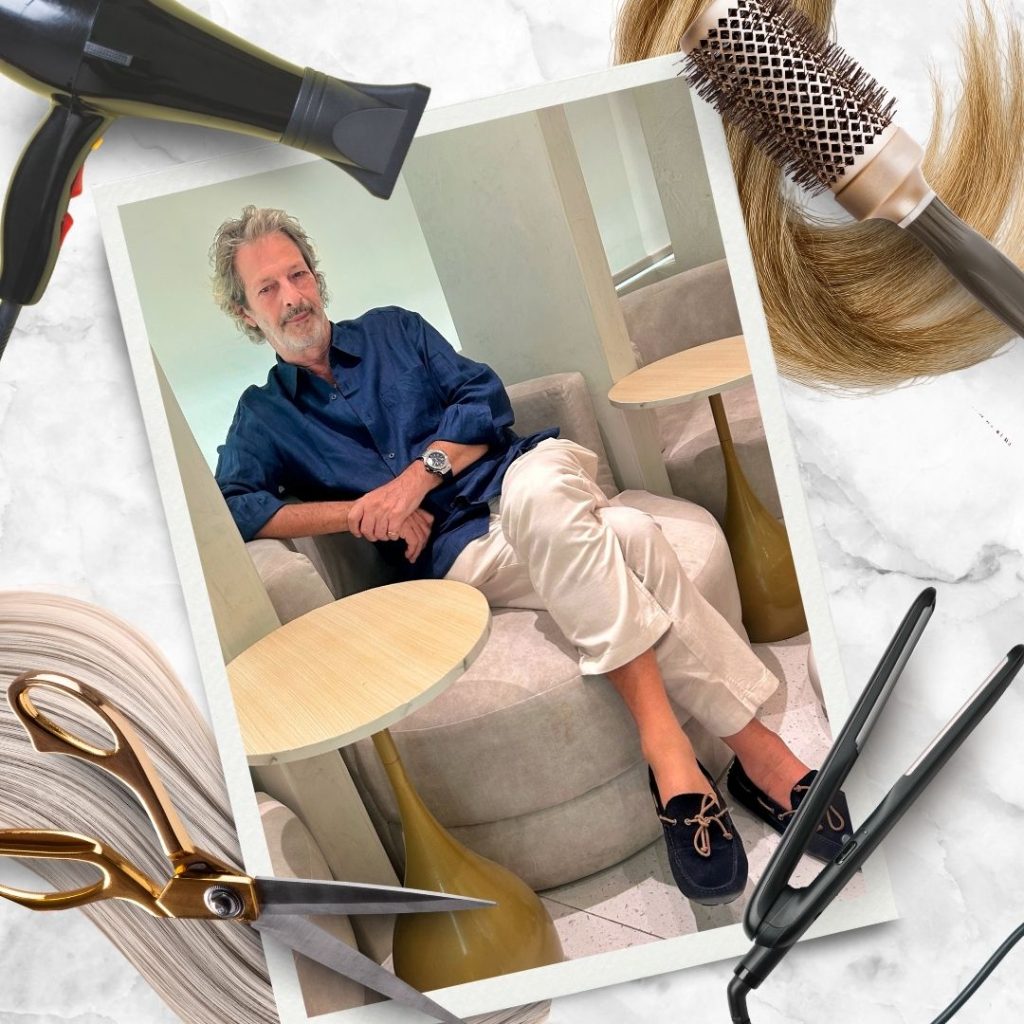
Pascalain Gianello, creative director at Couture Studio, who trained under Vidal Sassoon at 17 years old, argues for a return to the baseline: a precise haircut tailored to the individual. “Here in the Philippines, I am missing the individuality of people,” he says. “Almost everyone wants long hair, straight, or just curling the ends with the burning iron. But that is not fashion—that is not hair fashion. I’m sorry to say… that’s nothing.”
This homogeneity can be traced to the colonial past that has contributed greatly to what Filipinos have come to recognize as beautiful. A study on The Imprints of Colonialism and Capitalism on the Filipina notes how the colonial rule—later amplified by media and consumer culture—helped position whiteness and foreign beauty ideals as aspirational in the Philippines.
That influence continues to shape how beauty is referenced and replicated today. For years and to this day, there’s been a fixation on the latest “It” celebrity haircut or an influencer-approved hair trend du jour. On Reddit beauty threads, users express a kind of hesitation in fully owning one’s natural hair, especially when it doesn’t align with what’s currently in vogue. Shampoo commercials that have long privileged straight hair have left those who don’t have it questioning whether their natural hair is beautiful enough.
Over time, it’s become instinctive to work against what we have–in this case, the hair we’re born with–as we chase trends or copy what we see. It is precisely this disconnect that leads Gianello to advocate for haircuts tailored to the individual. “Cutting hair is not about seeing hair on the floor,” he says. It is about engineering a shape that suits the person—a cut tailored to you, and in that sense, uniquely yours, executed to a professional standard for wearability and ease.
“The face is a beautiful picture, and hair is the frame. If the frame is not correct, something doesn’t go well.”—Pascalain Gianello, French-Italian hairdresser and Vidal Sassoon protégé
The Architecture of the Frame
Gianello is married to a beautiful Cebuana, Sonia, who herself is a testament to his haircutting mastery: her hair is beautifully shaped, très chic, and befitting of her stature. “The face is a beautiful picture, and hair is the frame. If the frame is not correct, something doesn’t go well,” he says. “Women and men need to feel confident, and they can only feel that way with great work on their heads–in this case, getting a suitable frame.”
Many Filipinos have yet to experience a quality haircut suited to their individuality—and the sense of freedom it can bring. Often, a style is chosen based on a visual reference, without considering the technical foundation required to make it work for specific features.
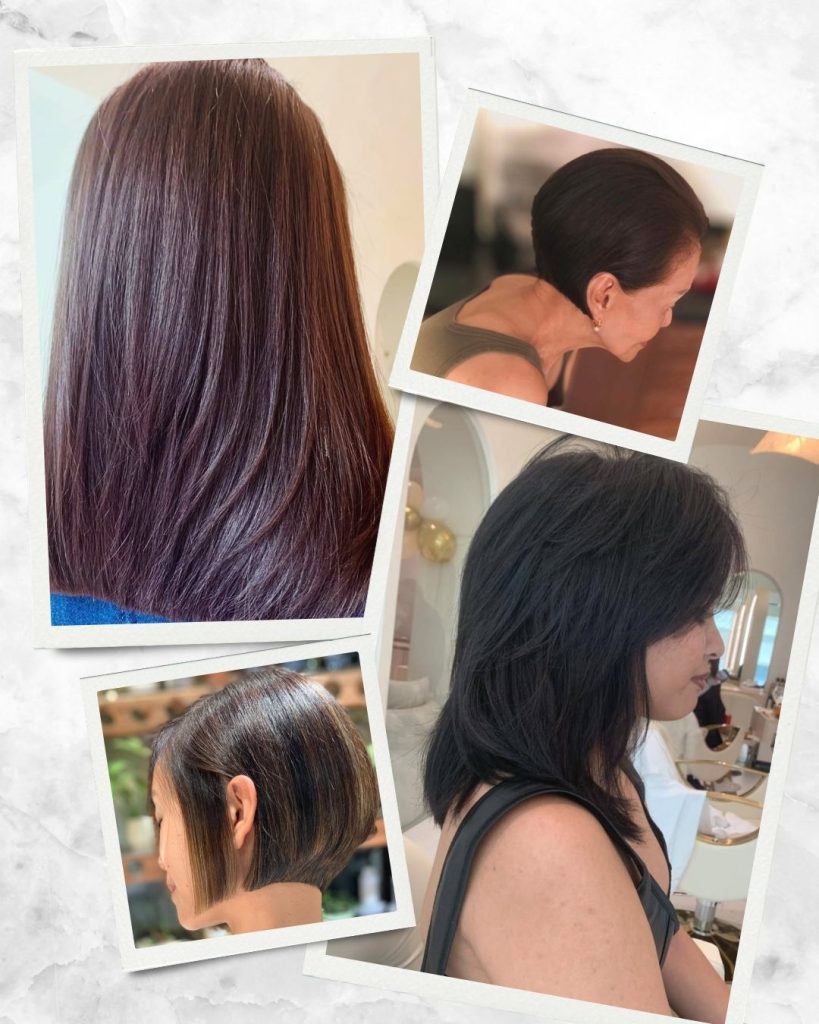
“Definitely, not everyone can wear long hair. For instance, people of a certain age are appreciating shorter haircuts—but too often, the way it is done lacks shape,” Gianello explains. “It is not emphasizing the face, the body shape, or the way one moves. The overall silhouette has no dynamic!”
His technique involves a level of precision that respects the natural qualities of hair—its texture, pattern, and direction of growth. It is highly tailored to what you were born with, beginning with a cut that fits the individual rather than an imposed style.
Sitting in Gianello’s chair is a distinct experience compared to the typical Philippine salon visit. There is little room for fluff—no upselling of extra services, no performative small talk. He is direct about what he sees and what he intends to do, often explaining his process as he works. The master haircutter starts by instinctively running his fingers through your hair, searching for the cowlick, or, as he proudly translates in Filipino, the puyo.
This analysis is the foundation. With over five decades of experience, he says it takes only a touch to recognize a hair type. Having worked with everything from Caucasian hair to fine Asian hair and thick African hair, his knowledge is both practical and expansive. “I know all kinds of hair, and with what nature is giving, I do the best—the maximum—to create shapes,” he says.
From the puyo as a starting point, he studies the growth pattern and how your hair falls and moves. Only then does he cut, with meticulous focus, as you sit straight like a soldier. “Shapes and precision are really key for the beauty of your hair,” he says. “It has to do with ‘geometric legislation.’ If your face is round, square, or oval, the cut has to be suitable and fit. We need to follow natural hair patterns, with the cowlick or the puyo–it’s imperative!”
It is this respect for the hair’s natural behavior that makes a haircut truly wash-and-wear. Because he works with the hair’s direction and movement, it falls naturally into place, looking alive and in good condition.
Gianello reiterates that the goal is not a cut that only works when styled. In fact, he does not push for the use of products, not even a blow-dry. “The result is beautiful, feminine, and sexy. You feel good because it makes you feel free. You can move in every sense,” he says.
He is also quick to challenge the idea that certain hair types are difficult to work with. “There are times when a hairdresser may tell you, ‘you have too fine hair,’ ‘you have this, you have that,’ or whatever, which makes you think ‘oh, it’s because of my hair,’” he says. “All hair for me is good, and you can get perfect results with all types of hair. The quality of a cut is not because you have ‘good’ or ‘bad’ hair. Nobody has ‘bad hair’.”
While he notes that hair condition—such as damage from health issues or extreme chemical processing—is a separate challenge, natural texture should never be used as an excuse for a poor cut. “I always create looks and build up shapes and lengths according to hair quality,” he adds.
The Discipline of the Craft
A haircut by one of the few remaining Vidal Sassoon protégés is priced at ₱6,000—an investment that’s rather practical given Gianello’s pedigree and the precision of his work. (He is currently offering a special ₱2,999 rate for first-time clients.) It also sits within the wider range of Manila’s most skilled hairdressers, where cuts can run anywhere from ₱4,000 to ₱10,000 per session.
“People spend money constantly on nonsense in hairdressing. One can spend a lot just for a blow-dry. But if you have a perfect haircut, you don’t need that because you can do your hair on your own,” he explains. “I always want to offer honest and better solutions!”
For him, the logic is simple: With the right structural foundation, styling becomes secondary—hair naturally carries its own shape and movement long after the salon visit.
Gianello works with the patience of an artisan, often taking 45 minutes to two hours to complete a cut—significantly longer than industry norms. “Many hairdressers are cutting hair in 10 or 15 minutes, then they call the assistant for a blow-dry. I’m taking a long time to cut. It’s very precise. It’s not just a task to be done in sloppy manners!” he says.
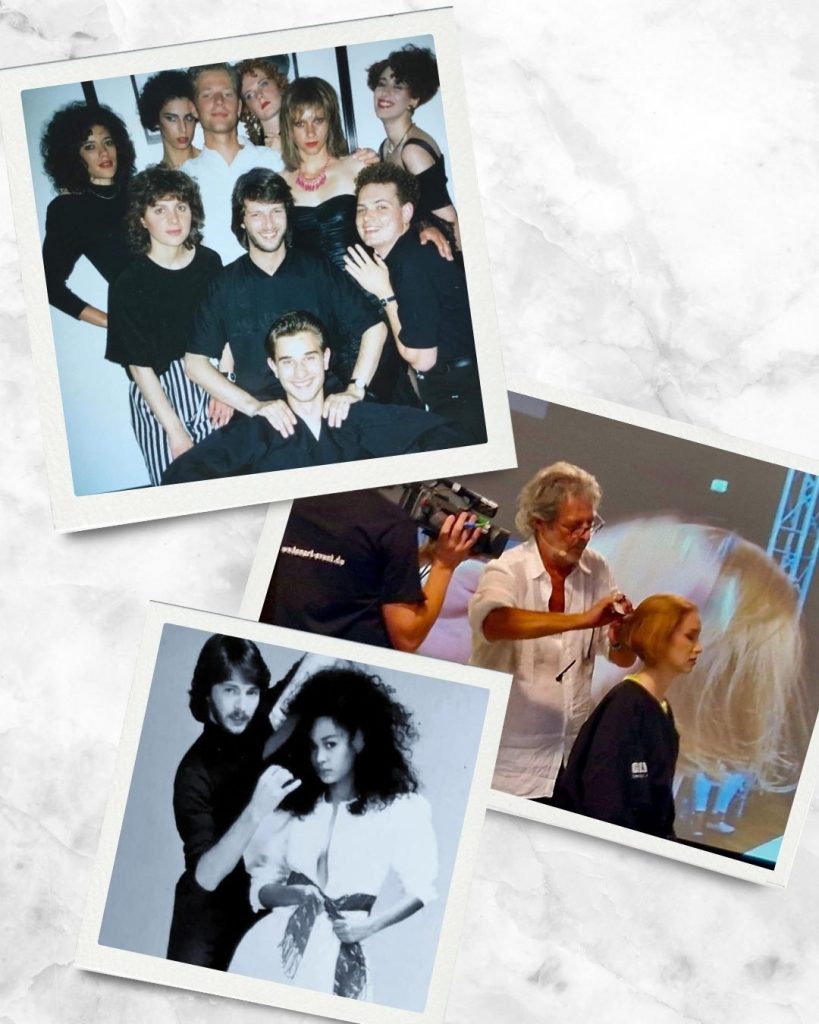
His journey began at just 13 years old. After an apprenticeship in France, he moved to London—the undisputed mecca of hair—during a period of cultural transformation. “It was the time of The Beatles, The Rolling Stones, and the miniskirt. It was a revolution in identity,” he shares.
He speaks of Vidal Sassoon and his mission to liberate women through haircutting. “Before, women used to use rollers and teasing; hair looked like a helmet. He wanted to free women from that. Then came the iconic Sassoon bob and the introduction of ‘geometric legislation’—a system that requires years of academic and practical study to master.”
He contrasts this with more relaxed professional standards in other markets, where barriers to entry are lower. “A salon can operate as long as you are registered and pay your taxes, but no one asks, ‘Do you have a license? Can you cut hair?’ Abroad, you cannot touch a head without that license,” he points out.
That difference in professional standards is echoed in the experience of other practitioners. For instance, Pin Antonio of the legendary Salon de Manila and known as the “hairdresser to the stars,” once found herself back in a classroom when she moved to the United States.
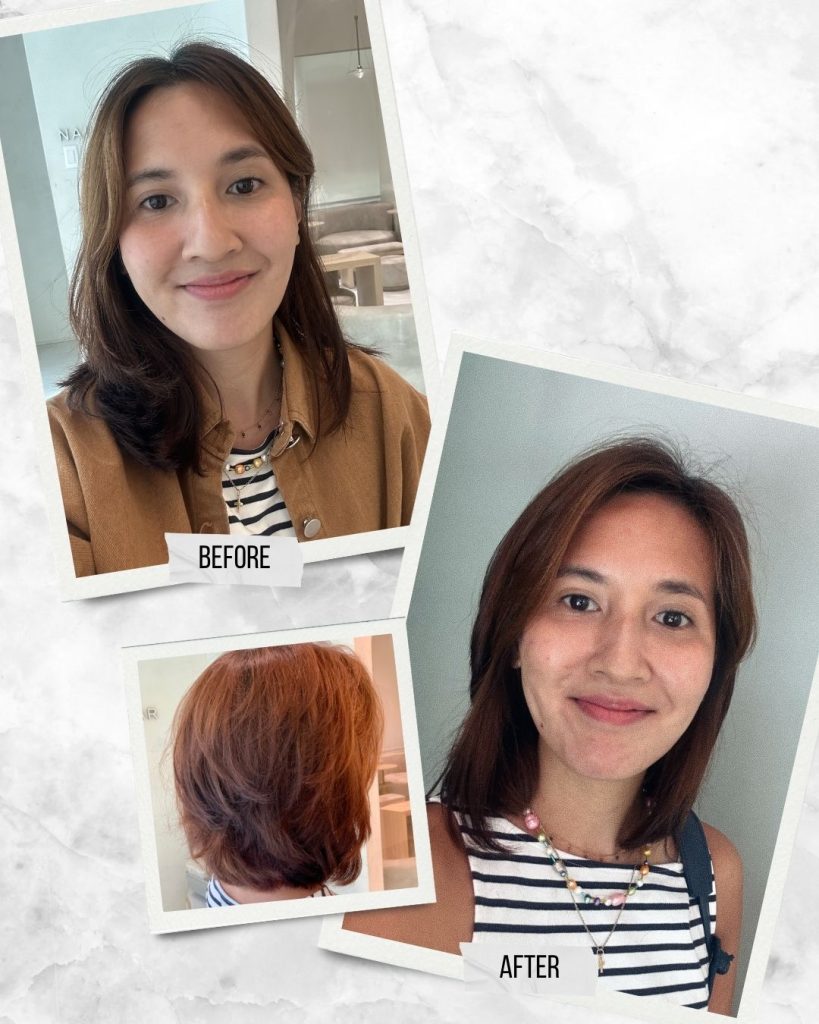
In a YouTube interview, Antonio shares how, despite her decades of experience and training at Toni & Guy and the Vidal Sassoon Academy, she was required to undergo a year and a half of study to qualify for a salon business license. She described having to study the “science, chemistry, and biology of hair” as a revelation: “Nagulat ako. In fact, pumutok ang utak ko… Mas malalim yung knowledge dito (I was surprised. I was mindblown. The knowledge here is deeper),” she said.
“It’s impossible for me to think that haircutting is anything less than a serious profession,” says Gianello. “I’m European, and I can’t think that way. So I try really hard with facts—with real work—to earn that respect. And I’m taking this profession really seriously to make you, as a client, beautiful–and not to make a show off in front of you. My person is not important,” he adds.
The Dream for the Next-Gen Hairdressers
“In the Philippines, people don’t go to hairdressers anymore,” notes Gianello. And seldom is the haircut the star of the show. For many of us, we put our money (and hopes and dreams!) on the post-cut treatment, the rebond or the Brazilian blowout, the bleaching and coloring, and more.
But for Gianello, this signals a missed opportunity in how hair is approached. His goal is to provide a cut that’s perfectly executed according to your hair, that is effortless, wash-and-wear, and requires minimal to no styling at all to look alive–unexpected winds and electric fans be damned.
“I am a creative. I fell into hairdressing, and I love to make people happy, very happy. And I love to create some really beautiful works,” he says. “This is my motivation.”
The French-Italian who sticks to the philosophies of the mentors that taught him but maintains “my heart is Filipino,” says, “My wish is to create so much more for the next generation of hairdressers in the Philippines. As a foreigner, I have the chance to give this to Filipino women and maybe some gentlemen who are interested in that, and I hope they are willing to spend at least 10 years learning it.”
Pascalain Gianello remains one of the few Vidal Sassoon protégés around, and for those who truly care about the integrity of their hair and want to see the full potential of their natural hair, his work is a mastery worth experiencing firsthand.
“Hair needs to be alive. It needs to move, following your body movements and everything,” he concludes. “And with the right cut, you just need 10 fingers through your hair, and it’ll look perfect again.”
THE 411 ON GETTING A CUT BY PASCALAIN GIANELLO
The writer shares insights from her experience with a Pascalain Gianello cut, including what to expect and how to make the most of it.
1. Tell him what you prefer.
Do you want long hair or short hair? While it may seem that Gianello is partial to the bob, he will adjust if you’re hesitant about a big change. Though given the heat in the Philippines, a bob doesn’t sound like a bad idea.
2. Be open to what he suggests.
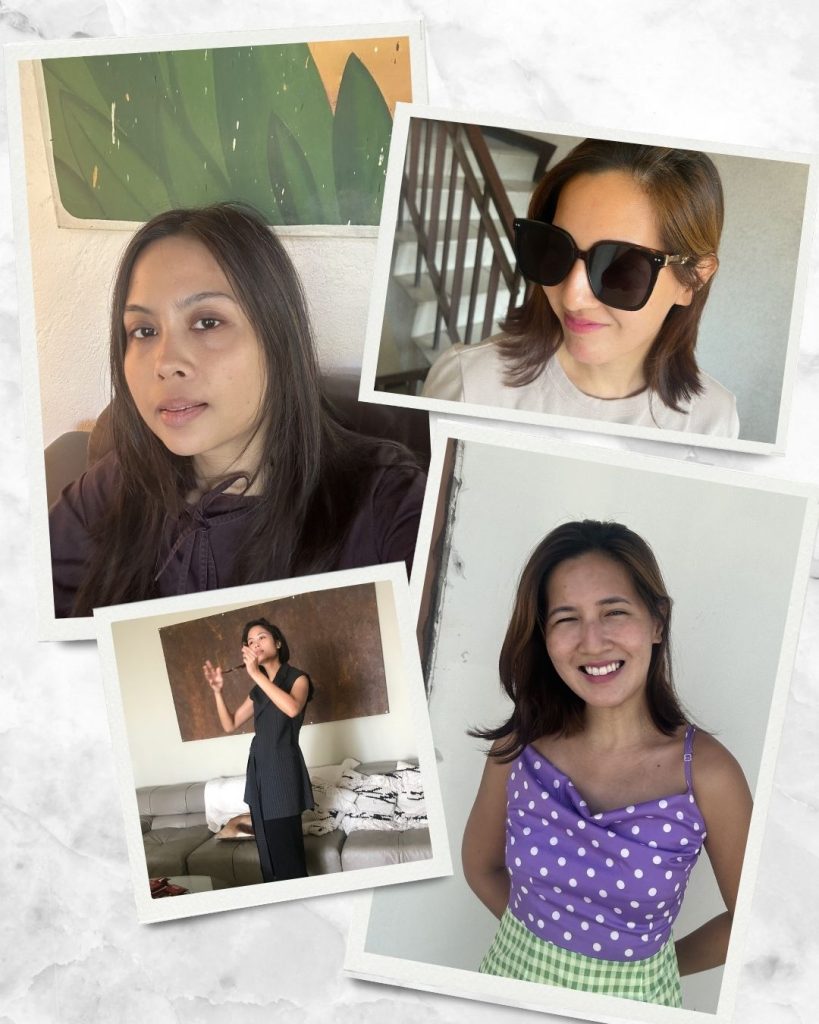
Anna Canlas, an editor and long-time client of Gianello, shares: “He gave me a bob in my late twenties and now a longer layered cut—because he encouraged me that I could pull it off even if I’m lazy with haircare. And he’s right.”
3. Make the most of the time.
Know that this is a rare opportunity—having a Vidal Sassoon-trained hairdresser work on your hair with this level of attention—so it’s worth engaging with the process. Ask questions if you can; he is generous in explaining what he sees and what he’s doing. That way, you can also explain to your friends what a “geometric legislation” is when they gush over your new ‘do.
4. Expect it to be nothing like a regular haircut.
Gianello’s meticulousness, straightforward approach, and professionalism are refreshing. He is laser-focused and keeps all his attention on the work. He cuts with striking precision, down to millimeters, using a comb marked with graduation lines. No clips, no products, and no blow-dry styling to force shape into place.
5. Go home knowing your hair will still look good the next day.
A true trait of a Gianello cut is its real-life wearability. In this writer’s experience, even days and weeks after the haircut, it remains easy to manage. I can wear it up in a clamp, styled into a half-up ‘do, or left down—and it still looks super chic.