Let me tell you what I didn’t do before my appointment with Dr. Jennie Diaz of Skin 101: I didn’t spend three nights researching horror stories. I didn’t make anyone talk me into it or out of it. I went and an hour later I walked out looking exactly like myself—just more so.
That’s not bravado. It’s the perspective that comes with spending years in the beauty industry, sitting across from dermatologists and aesthetic doctors, editing stories about ingredients and innovations, watching the science evolve in real time. When you’ve been this close to the industry for this long, the fear of injectables starts to look like what it usually is: quite outdated and honestly scary.
And I want to give you that same clarity. Not to convince you to do anything—but because the conversation around injectables in 2026 deserves a serious update.
The Image We Need to Retire
When most people picture injectables, they picture the same thing: frozen foreheads, pillow cheeks, lips that look like they’ve been stung by something. That aesthetic is real—but it belongs to a specific era, born from specific products used in specific ways, often in excess. It was the era of “more is more,” and it left a mark literally and culturally.
I honestly think that era is over.
The philosophy driving today’s best aesthetic medicine is fundamentally different. The goal is no longer to transform. It’s to restore. To look like the best, most rested version of yourself—not a filtered version, not a younger version, not someone else entirely. The question practitioners are asking now isn’t “what can we add?” It’s “what has been lost, and how do we give it back?”
That shift changes everything about what injectables look like, feel like, and do.
What I Actually Did
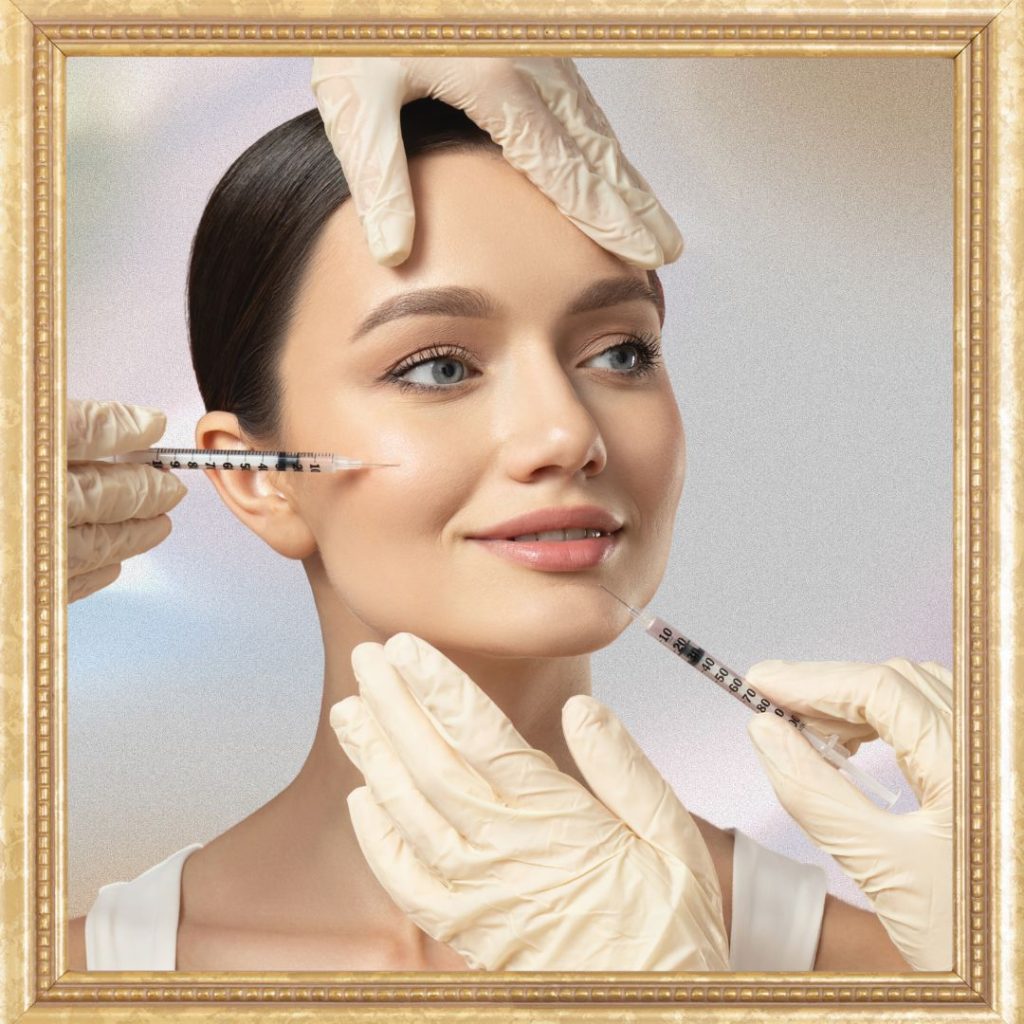
I had two treatments done in a single session with Dr. Jennie Diaz of Skin 101: Sculptra on my temples and cheeks, and Restylane Kysse on my lips. The whole thing took about an hour. There was no significant discomfort. I want to sit with that for a second, because I think the logistics alone are worth addressing. One hour. No downtime that derailed my week. No one at events clocking that something had happened to my face. Just me, going about my life, with something working beneath the surface.
Sculptra: The Treatment That Asks You to Wait
Sculptra was my first experience with a biostimulator, and if you haven’t heard that word yet, file it away—because it represents one of the most significant shifts in modern aesthetics.
A biostimulator doesn’t really fill. It rebuilds. Sculptra is made of poly-L-lactic acid or PLLA, a biocompatible material that, when injected into the deeper layers of the skin, acts as a scaffold. It doesn’t sit there adding volume the way a traditional filler does. Instead, it signals your skin’s own fibroblasts to start producing collagen. Your skin does the work. Sculptra just gives it the instruction.
Why does that matter? Because after our mid-twenties, we lose roughly one percent of our collagen every year. That loss is cumulative and unnoticeable, you don’t really see it happening until one day you look in the mirror and something feels off. Not wrong, exactly. Just tired. A little hollow. Less structured than it used to be.
For me, that showed up most in my temples especially when I lost weight. It’s an area most people don’t think about until they notice it–that slight concavity at the sides of the face that makes the whole upper face look more angular, more drawn. No serum was going to fix that. No facial was going to rebuild what weightloss took. I knew that going in, which is part of why I was ready.
Dr. Diaz treated both my temples and cheeks, areas that work together to create the lifted, structured quality that reads as youth without reading as “done.” And here is where Sculptra asks something that most treatments don’t: patience. The initial volumizing effect you see right after treatment comes from the saline solution used to dilute the product. That fades within a day. Then the real work begins.
Collagen synthesis typically starts around four to six weeks after treatment. The full picture reveals itself over months. Optimal results are usually visible two to three months after the final session, and they can last up to two years.
Two years. From one series of treatments.
I’m a month in as I write this. The hollowing in my temples is already softer. My cheeks feel more supported. And I know this is still just the beginning. There’s something genuinely exciting about a treatment that keeps getting better the longer you leave it alone.
Restylane Kysse: More Than a Lip Filler
I’ve had lip filler before. So when I say that this experience felt different, I mean it with full context. Restylane Kysse uses what Galderma calls XpresHAn Technology, a hyaluronic acid gel formulated specifically for the lips, designed to move naturally with every expression. Not stiff. Not static. Soft, flexible, responsive. The difference between lips that look filled and lips that just look like yours—better—comes down almost entirely to the quality of the product and the hand that places it.
But here’s what I didn’t expect, even knowing what I know: the hydration.
Hyaluronic acid is a moisture-binding molecule that exists naturally in the body and like collagen, it depletes with age. Lips lose HA over time, which is why they get thinner, yes, but also drier, more lined, and less supple. Most people think of lip filler purely in terms of shape. What Restylane Kysse also delivers is deep hydration, and I felt that difference almost immediately.
My lips are less dry. Noticeably, genuinely less dry. That wasn’t the reason I booked the appointment, but it might be the detail I mention most when people ask me how it went.
Dr. Diaz used a different technique than I’d experienced with Kysse before, and the result is the most natural my lips have ever looked after a treatment. Defined without being overdone. Fuller without being obvious.
The Injector Matters
I want to be honest about something: the reason both of these treatments look and feel the way they do has as much to do with Dr. Jennie Diaz as it does with the products themselves.
The best injectables in the wrong hands can still go wrong. The balloon faces, and the frozen expressions of the past weren’t always the fault of the product—they were often the result of overcorrection, poor technique, or a practitioner (or patient) without the restraint and anatomical understanding that this work demands. Choosing your injector is not a secondary consideration. It is an important consideration.
Dr. Diaz assessed before she planned. She listened before she suggested. She has what I can only describe as the lightest hands—precise, unhurried, assured.
A Month In
People have noticed. Not the treatments, just me. That I look refreshed. That something about me seems more awake and more rested. Nobody has said “Did you get something done?” They’ve said “You look really good.”
That is the entire point.
Modern injectables, done well, don’t announce themselves. They don’t rewrite your face. They give back what time has been borrowing—the structure, the hydration, the glow that used to just be there without you thinking about it. At forty, I’m not chasing twenty-five. I’m not interested in looking like someone I’m not. I just want to look like the best version of the person I already am.
These treatments, with the right doctor, can do that.
And if you’ve been sitting on the fence—curious but cautious, interested but afraid—I hope this gives you something more useful than reassurance. I hope it gives you information. Because an informed decision, made for yourself, on your own terms, is always the most beautiful place to start.