Major shifts are not new in the beauty industry, but it starts to raise brows when the same thing keeps happening. It starts with a thread: “Is MAC Studio Fix being discontinued???” Or a comment under an Instagram post that reads: “stocking up just in case.” The reason behind the dread is the reformulation of some of the industry’s most beloved classics.
We’re talking about the products you’ve repurchased without a second thought, worn to every event, and trusted through the kind of heat that normally would melt your makeup by noon. These no-brainer beauty picks were rebuilt—without warning—from the inside out.
In the span of roughly two years, five of the most iconic complexion products in prestige beauty announced major reformulations. Giorgio Armani’s Luminous Silk, 25 years old. Givenchy’s Givenchy Prisme Libre Loose Powder, 20 years old. Estée Lauder’s Double Wear, 29 years old. Dior Forever. And MAC’s Studio Fix Powder Plus Foundation—the best-selling powder foundation in the United States since 1992, with 1.7 million units sold in 2024 alone.
All of them rebuilt. All at roughly the same time.
This piece isn’t a product review. It’s an attempt to answer the more interesting question: why now, and what does the answer tell us about where beauty is actually going? Because a reformulation isn’t just a formulation decision—it’s a reflection of the industry’s current state. It’s a brand identity risk, a regulatory response, a cost calculation, and a recruitment strategy, all at once.
The Products: What Changed, and What It Means
Before getting to the why, it’s worth going through each product—what changed, what the reviews found, and what we make of it.
Giorgio Armani Luminous Silk
The original launched in 2000 and became the kind of foundation that professional makeup artists refuse to work without. It earned its reputation through a finish that is neither matte nor dewy but luminous and skin-like in a way that flatters almost everyone—it felt ahead of its time. For more than two decades, it was the go-to answer whenever anyone asked what foundation you actually use.
What changed: The new formula replaces its patented micro-fil pigments with what Armani calls “liquid silk” technology, which it claims improves performance and longevity. Niacinamide was added. The shade range expanded to 44, with new ultramarine pigments to correct ashiness on deeper skin tones and green pigments to brighten olive complexions. And on the down-low—absent from the press materials—certain cyclic silicones were removed from the formula in line with new EU regulations. A detail we will return to.

Canadian-Filipino beauty content creator Sean Anthony has built a following of over 3 million on TikTok for his straight-talking beauty evaluations, and his read on the reformulation was straightforward: “It feels just as thin as the old formula—weightless, which is a good thing. The texture feels hydrating and smoothing. The finish is stunning, still naturally glowing, still skin-like but not greasy. It definitely evens out my skin.” Coming from someone who has tested enough foundations to know the difference between a genuine upgrade and a repackage, that reads as a clearance.
The verdict: Longtime users expressed relief. The finish survived intact, the shade expansion is meaningful, and the improvements felt real rather than cosmetic. One of the cleaner reformulations in recent memory. If you loved the original, try the new one before making any decisions.

Giorgio Armani Luminous Silk Foundation
P5,423, Zalora
Estée Lauder Double Wear
For the first time in its 29-year history, Double Wear underwent a major reformulation—the kind of move that caused a significant stir in the beauty world, and not without reason. Double Wear didn’t just have a reputation as a foundation. It was the only foundation that worked: through long workdays, humid climates, and every occasion where makeup absolutely could not move.
What changed: The new formula introduces what the brand calls Polymer Mesh Matrix Technology—a breathable polymer system with color-treated micro-pigments—and now claims 36 hours of wear, up from the original 24. Niacinamide and algae extract were added. The shade range expanded to 70, with pigments updated across every shade for a more dimensional finish. The texture is notably more fluid and lighter, which the brand frames as breathability and buildability.
Nobody cut through the noise on this one quite like Belle Rodolfo. Her split-face comparison landed the most useful take we’ve seen on the new formula: “It does feel thinner. The shade match feels a little warmer. It’s easier to blend—the original felt closer to the skin, thicker on application, but I liked it more. The new one is more blendable when you first apply it, lighter, takes a little longer to set, and is a little more hydrating. At the end of the day, if I didn’t tell you I was wearing two different foundations on both sides of my face, you wouldn’t be able to tell.” That last line is probably the most useful thing anyone has said about this reformulation.
The verdict: The longevity holds—confirmed by most early reviews. The finish is less flat and more skin-like, which is either an improvement or a tradeoff depending on what you came to Double Wear for. Some oily-skin users report softer oil control in the new version, a question worth monitoring for anyone living in a humid climate.

Estée Lauder Double Wear
P4,560, Zalora
Dior Forever
The most structurally interesting case of the group. Rather than updating a single formula, Dior split the franchise into two: Forever Skin Wear and Forever Skin Glow—each targeting a different skin type and finish preference while preserving the long-wearing, full-coverage DNA. The Skin Glow sits closer to the original in spirit. The Skin Wear has a matte-like finish, a more contemporary read.
What changed: The decision itself is arguably more significant than either formula. Splitting a product into two SKUs is an acknowledgment that one formula can no longer serve a market that has diverged—between consumers who want the bulletproof matte coverage of the 2010s and those who want something that looks like skin, just better. Dior stopped trying to reconcile those two preferences and gave each one its own product.
TikTok Shop’s 2026 New Star Creator of the Year Lierge Perey tested both sides and found them closer together than the naming suggests: “The Skin Glow isn’t super runny—it still holds its shape, blends nicely, super lightweight. It’s so glowy, and it gave me coverage but not to the point it covered my veins—light to medium coverage. For the Matte, the consistency is actually thinner than the Skin Glow. I wouldn’t say it has that super duper matte finish, it still has a glow—it’s just not flat.”
The verdict: Smart architecture. The split is an honest response to a fragmented consumer. If you were a Forever loyalist, the Skin Glow is your reference point.

Diorskin Forever Fluid Foundation Skin Glow
P4,600, Rustan’s The Beauty Source

Diorskin Forever Fluid Foundation
P4,600, Rustan’s The Beauty Source
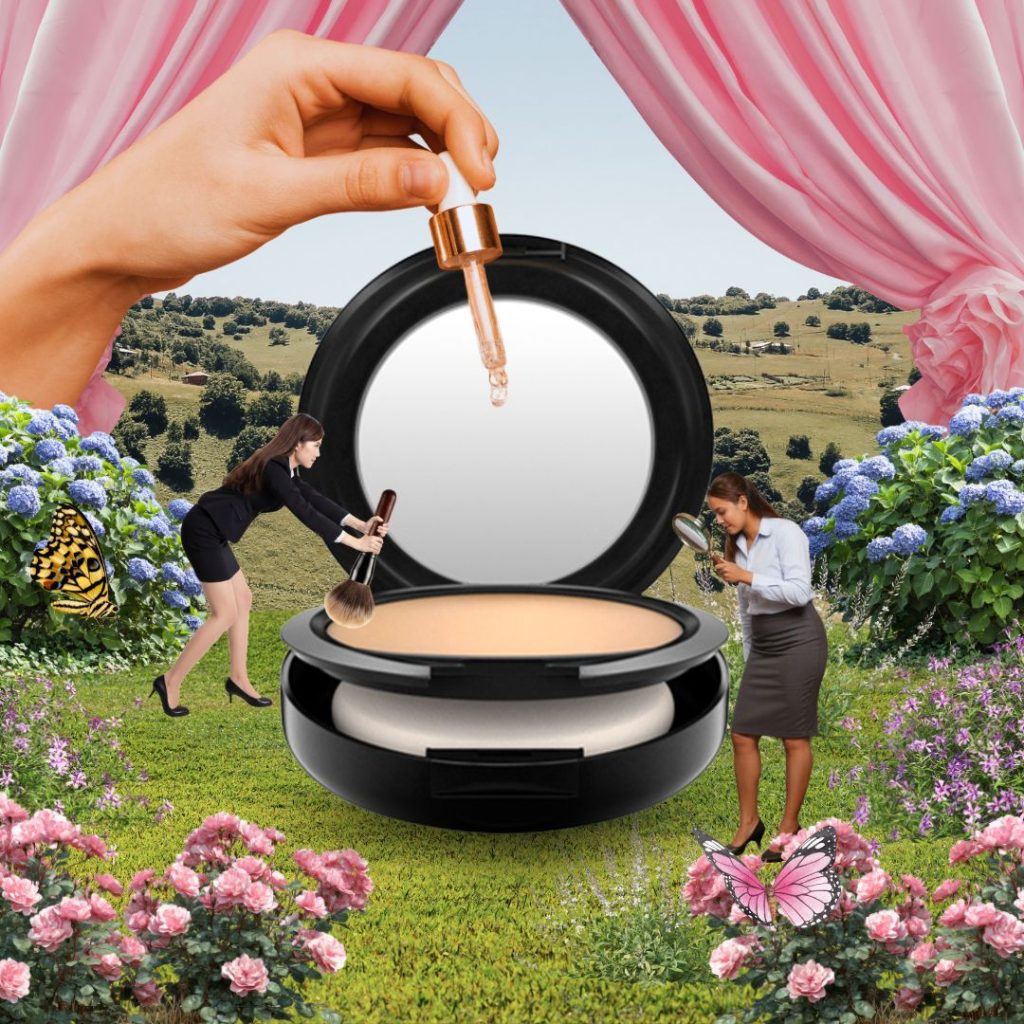
MAC Studio Fix Powder Plus Foundation
The most emotionally charged reformulation of the group, and arguably the most revealing. Studio Fix Powder has been a MAC icon since 1992. Makeup artists built careers on it. The coverage was dense enough to handle the longest days, and the shade range in NW tones was one of the more reliable matches for deeper, warmer complexions in a prestige powder—a category where that has historically been hard to find.
What changed: Everything centers on one significant move: the removal of talc. It was Studio Fix’s workhorse ingredient—the reason a single press-and-swipe delivered such opaque, tenacious, almost theatrical coverage. In its place: hydrophobic surface treatment of pigments for 24-hour waterproof wear, micronized silica particles for a smoother application, and new skincare additions—rose extract, sugar kelp, and red algae. The shade range now carries a specific claim that the formula does not go grey on any skin tone. The compact is also now refillable.
It’s also worth noting that the Studio Fix situation isn’t isolated within MAC’s own lineup. The brand has been quietly rebuilding its classics across categories—the lipstick reformulations being the most discussed. As one longtime MAC lipstick loyalist put it: “There are some things one could always rely on—MAC matte lipsticks gripping onto one’s lips for dear life. MAC’s newly reformulated take on matte removes that ‘grippy’ feeling that made them so long lasting. In some ways, this new version is refreshing—it’s lightweight, the matte finish is smooth and beautiful. But it just doesn’t last as long.” The Studio Fix story follows the same logic.
The clearest breakdown of the powder reformulation came from someone with the credentials to actually explain what happened inside the formula. Alexis Androulakis—product developer, co-founder of The Lipstick Lesbians, and a 20-year industry veteran whose resume spans NARS, Shiseido, Procter & Gamble, and A-list celebrity brand consulting—framed it with the precision of someone who has been inside these decisions: “A natural matte finish with the new Studio Fix, and the new formula feels lighter. This side is still buildable, and definitely creamier. While I have seen absolute upgrades in terms of the new renovated powder, I do understand why people are still madly in love with the original and the talc. We did lose the coverage, but we did gain a more seamless experience—a modern upgrade pushing us into more of a natural look, a more realistic finish on skin, versus the original Studio Fix, which was driven by the heavy opacity of the talc.” That is the most honest summary of what was gained and what was traded.
The verdict: The division in response is real and legitimate. The new formula is more modern, more skin-conscious, and more inclusive. But it is not the same product. The one-swipe coverage that loyalists depended on—largely talc-dependent—now requires building up. For a makeup artist doing a quick touch-up, that is not a small difference.

MAC Studio Fix Powder Plus Foundation
P2,350, Rustan’s The Beauty Source
Givenchy Prisme Libre Loose Powder
Givenchy Beauty is a decent-sized business, but that’s almost singularly due to one product: Prisme Libre—a beloved item that sets makeup, blurs imperfections, reduces shine, and has remained the definitive setting powder in prestige beauty despite nearly two decades of competition. It accounts for a wildly disproportionate amount of the brand’s beauty sales. Born in 1989, it is less a product than an institution.
What changed: Talc was removed and replaced with white clay. The new ultra-fine formula is 46% thinner than the previous one, made of micronized powder and powered by new Prismatic Light Technology—light-reflecting pearls and soft-focus powders designed to enhance skin’s natural radiance. In August 2024, Givenchy released the talc-free version, framing it as “new and improved.” The brand claimed a 12-hour setting and 24-hour luminosity. What it could not claim was the blurring effect that made the original irreplaceable.
The response from loyalists was the most unambiguous of any reformulation in this wave. Where the Armani and Double Wear communities expressed cautious relief, and the Studio Fix community split down the middle, the Prisme Libre community was largely unified—and not in the direction Givenchy had hoped. The pore-blurring effect that defined the product for 35 years was noticeably diminished. The new formula may not blur pores as effectively as the original—it still does blur them, just slightly less. For a product whose entire identity was built on that blur, slightly less was not good enough.
The verdict: The most cautionary tale of the group. The new formula is lighter, more breathable, and technically more advanced—but it is not the product people were loyal to. Givenchy removed the one thing Prisme Libre was actually famous for, and no amount of Prismatic Light Technology has replaced it yet. If you’re a loyalist still working through old stock, the pressed powder version has emerged as the closest alternative.

Givenchy Prisme Libre Loose Powder
P4,992, Zalora
Everything, All at Once
The five reformulations above did not happen in isolation. They are the output of three pressures that have been building in the industry simultaneously—and understanding them together is what makes the timing make sense.
Regulations as The Primary Pressure
Since 2020, the EU has been systematically restricting cyclic silicones—D4, D5, and D6—from cosmetic products, citing their classification as substances of very great concern due to their persistence and bioaccumulation in aquatic environments. D4 was banned outright from EU cosmetics in January 2022. Under Commission Regulation (EU) 2024/1328, D5 and D6 are capped at 0.1% in rinse-off products as of June 2026, and in leave-on products—including foundations—as of June 2027. Both thresholds are so far below functional use levels that they amount to a phase-out in practice. Many global manufacturers began reformulating well ahead of those deadlines.
These were not incidental ingredients. For decades, cyclic silicones gave luxury foundations their signature slip, blendability, and the particular weightlessness that made prestige makeup feel different from mass-market alternatives. Replacing them required rebuilding not just the formula but the sensory experience the formula was built around.
For global brands, running two separate formulas—one for European markets, one for everywhere else—is neither commercially feasible nor logistically practical. The reformulation happens once, for the world.
The MAC Studio Fix situation follows a parallel track. On September 25, 2024, the Risk Assessment Committee of the European Chemicals Agency classified talc as a carcinogenic, mutagenic, and reprotoxic (CMR) substance, Category 1B—meaning it is presumed to cause cancer in humans, a designation that under EU law triggers automatic movement toward prohibition, with a ban on talc in cosmetics expected by 2027. In the US, over 90,000 lawsuits have been filed against talc manufacturers, largely tied to evidence that naturally mined talc can contain trace asbestos fibers. In December 2025 alone, a single verdict awarded $1.5 billion to one plaintiff. The FDA proposed mandatory asbestos testing for talc-containing cosmetics that same month, though that rule was subsequently withdrawn.
Brands that relied on talc read the trajectory and reformulated preemptively. Getting ahead of regulation is always cheaper than responding to it after the fact.
Consumer Behavior As The Blueprint
Regulatory pressure created the occasion to rebuild. Consumer behavior determined what the rebuild would look like. The hybrid makeup-skincare market was estimated at $21.21 billion in 2024 and is projected to nearly double by 2035, driven by what the industry calls skinification—the migration of skincare actives, claims, and philosophy into makeup categories that were not necessary a decade ago. Over 50 percent of US consumers now actively seek products that combine makeup and skincare benefits; among Gen Z and millennials, that figure rises above 60 percent.
This is why every reformulation in this wave added actives the original formula never had. Niacinamide appears in both the new Armani and the new Double Wear. MAC Studio Fix now contains red algae and sugar kelp. For a heritage brand, adding these to an existing formula costs far less—in development time, supply chain disruption, and consumer communication—than launching an entirely new product. It also buys entry into the ingredient conversation that a brand like Armani or Estée Lauder cannot afford to be absent from.
Worth noting: makeup-level concentrations of skincare actives work differently than they do in dedicated skincare. More than 62 percent of beauty consumers now actively seek products combining at least two functional claims—and brands are responding to that. But niacinamide at 1–2 percent in a foundation still delivers some benefit at a fraction of what a targeted serum at 5–10 percent would.
The sensory and aesthetic improvements in these reformulations are real. The skincare benefits are a genuine bonus. A foundation is still primarily a foundation—and while the ingredient story is accurate, it is also doing heavy lifting on the marketing side.
The Generational Shift As The Seal
Regulatory pressure forced the hand. Consumer demand shaped the direction. What made brands willing to absorb the full cost of a reformulation—research, stability testing, supply chain overhaul, the real risk of alienating existing loyalists—was a generational shift they could not afford to ignore.
Gen Z now allocates 41 percent of its beauty spending to skincare, overtaking makeup in this demographic for the first time. Nearly two in three Gen Z consumers say they wish there were more clean-label beauty items available. The matte, full-coverage, transfer-resistant finish that made Double Wear and Studio Fix dominant in the 2010s is not the finish this generation reaches for first.
They reach for skin tints, tinted moisturizers, and products that lead with skin-first language. A formula built in 1997 competes poorly for a consumer who never wore it and has no nostalgic attachment to it.
Estée Lauder’s global brand president framed it plainly: the Double Wear reformulation was designed to connect with Gen Z and young millennial consumers, and Daisy Edgar-Jones was chosen as ambassador specifically to recruit a whole new generation of users. A reformulation is not just a product update—it is a bid for relevance with a consumer who does not yet know she needs the product, and who will not be reached by the version that existed before.
What these three forces produce together is not a coincidence. Regulation created the pressure to rebuild. Consumer demand provided the blueprint. Generational recruitment made the investment worth making. The brands that read all three correctly moved first—and the brands that moved first get to frame the narrative.
Behind Closed Doors
Here is the part that does not make it into press releases.
Some of what gets labeled innovation is also cost management. A Kline + Company industry report concluded that “despite sustainable and 2030 agendas and targets, the industry has been looking at costs first”—meaning the compliance rationale and the commercial rationale for removing expensive specialty ingredients like cyclic silicones tend to point in the same direction.
Reformulating away from them under regulatory pressure can reduce the cost of goods, even as retail prices hold steady or increase. That does not make the resulting products worse; in several cases above, they are genuinely better. But that alignment is not a coincidence worth ignoring.
A reformulation is also, practically speaking, a relaunch. A new formula means a new press cycle, new ambassador campaigns, and new conversations with buyers who never tried the original.
Estée Lauder’s Double Wear reformulation came as its parent company worked through a broader business recovery plan—and a hero product relaunch is one of the more efficient tools available to a brand trying to rebuild momentum. None of this undermines the improvements. It just means the motivations behind them are more layered than any press release will tell you.
When It Works and When It Doesn’t
The reformulations that worked share a clear pattern: they addressed what consumers had long complained about while protecting the one quality that made people loyal in the first place.
Armani Luminous Silk was beloved for its second-skin finish and buildable coverage—both survived the rebuild. What improved was shade inclusivity and skin benefit. Double Wear was beloved for staying put through anything, and early reviews confirm the new version still does. The improvements addressed real weaknesses—flat finish, limited comfort, shade gaps—without touching what made it irreplaceable.
The reformulations that divided people are the ones where that original quality got renegotiated. MAC Studio Fix was beloved specifically for one-swipe, bulletproof coverage—a quality that was largely talc-dependent. The new formula is more modern, and the skin-health story is stronger. But it is not the same product—building up coverage now takes more effort, and for the users who depended on that single swipe, no amount of red algae compensates for that. MAC’s lipstick reformulations followed similar logic: more comfortable and contemporary, but the signature longevity that defined them was noticeably softer.
The difference between success and division comes down to one question: did the brand correctly identify which quality its most loyal users were actually loyal to—and did it protect that?
What This Means for the Filipino Consumer
The Philippines beauty and personal care market continued to register healthy growth in 2024, driven by lifestyle changes and a growing middle class. The country’s tropical climate has elevated demand for products that hold up against heat and humidity—conditions that put these reformulated formulas under a different kind of pressure than the temperate markets where they were tested and launched.
The performance question is real. If Double Wear’s oil control is “softer” in the new formula—already a notable shift for temperate-climate users—that has different implications here. Filipino consumers have shown a strong preference for humidity-resistant formulas, and the products that built loyalty in this market did so specifically because they could survive conditions that most foundations cannot. Whether the new formulas hold up to that standard is a question that deserves a local answer.
The shade question is equally worth watching. The expanded ranges Armani—at 44, Double Wear at 70, Studio Fix at 67—are designed to serve a broader global spectrum. But Filipino ideals around skin tone are evolving, with growing acceptance and celebration of natural morena skin, which means the demand for accurate shade matches in the NW warm-to-deep range is only growing. In our case, “more shades” is not the same as “the right shades.”
Local Filipino brands like Happy Skin, blk Cosmetics, Vice Cosmetics, and ISSY have been gaining traction by building for this climate and this consumer—with humidity-resistant formulas, local undertone considerations, and price points directed to a local market.
The global reformulation wave may be moving prestige foundations in a direction that serves the Filipino consumer better on ingredients and shade range. Whether it serves her on performance is still an open question—and one that the local beauty conversation is well-placed to answer.
The Honest Advice
A reformulation is an act of brand confidence—the belief that the reason people fell for a product can survive being rebuilt. The Armani and Double Wear reformulations suggest that when a brand knows precisely what made something beloved and has the discipline to protect it while everything else improves, the result can be genuinely better than what came before.
But the beauty industry is not sentimental, and neither are its economics. The same pressures producing better formulas are also producing faster innovation cycles, higher prices, and ingredient stories that sometimes do more marketing work than clinical work.
A formula rebuilt under regulatory pressure, aligned to a generational aesthetic shift, and relaunched as a marketing event is not a simple upgrade—it is all of those things at once. The consumer who understands that is better positioned to evaluate what she is actually buying.
The honest advice: Try the new formula before you mourn the old one. Wear it through a full day and see what holds. The answer to “is it still good?” doesn’t live in a press release. It lives on your skin, through your actual day.
And if it doesn’t hold—well, that’s a story too.