I moved to Denmark for love. (Don’t laugh—it’s true!)
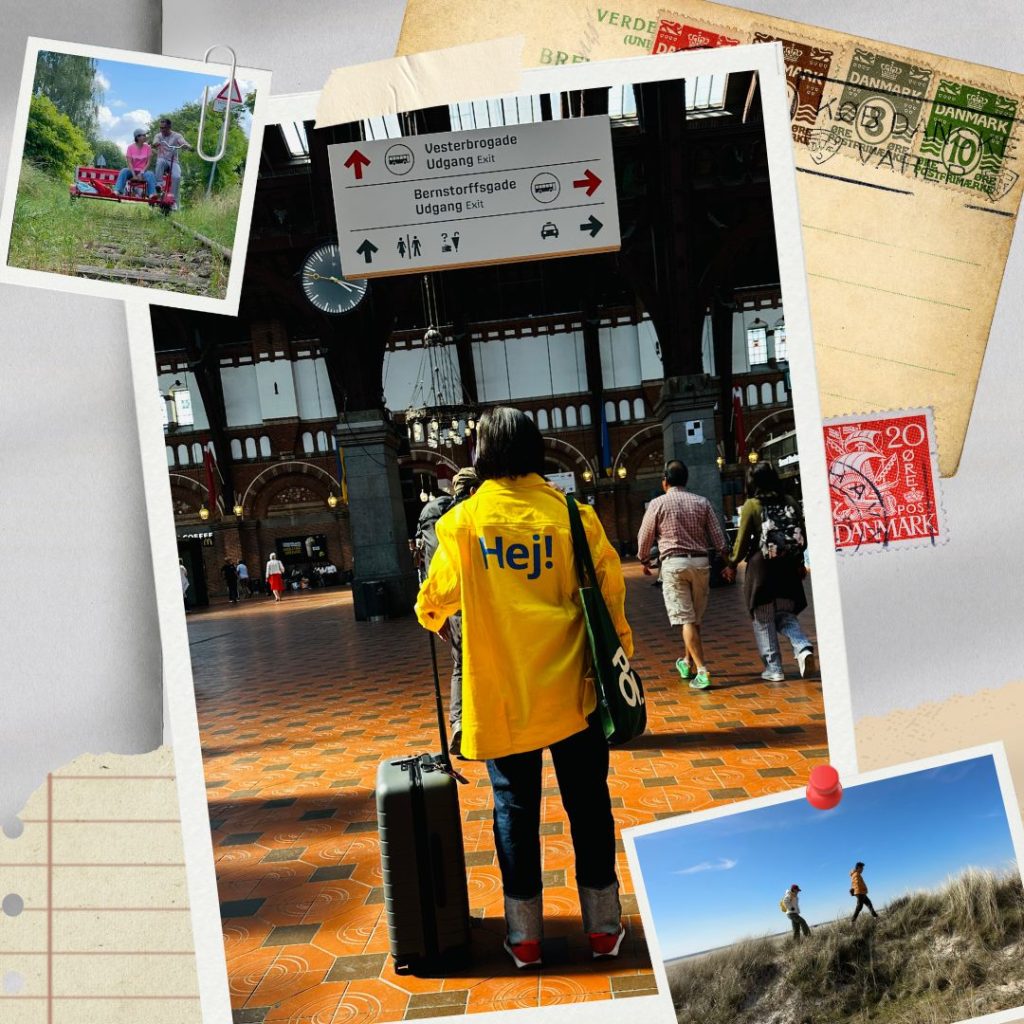
After more than four decades of living in Manila, I packed up my bags and moved to Billund, Denmark in 2023. That was also the year I married my husband, Ian—a fellow Filipino who had been living there since 2015 and working at the LEGO Group, where he’s a senior concept artist.
We first crossed paths in 2019 over a creative project, which brought him to Manila. Our relationship began in 2020, right in the middle of the pandemic. After navigating long-distance calls, lockdowns, and time zone challenges, we finally decided it was time to build a life together.

Before the big move, I’d only been to Denmark twice, both in 2022. The first was to help Ian recover after a 21-day hospital stay. The second was when we got married.
Billund is a small town three hours away from Copenhagen, with a population of just 7,484 (according to Wikipedia). I remember telling Ian, “It doesn’t look very European here,“ and asking, “Where is everyone?” Coming from chaotic Manila—and as a city girl who spent nearly two decades in the fast-paced world of publishing—it was such a huge change.
Billund is sleepy and super quiet. Most times, the road is clear—so clear that I don’t run into anyone while walking to the grocery store. There’s no mall or cinema, but there are four groceries within a 1-kilometer radius. Shops and restaurants close early on weeknights (there’s zero nightlife!) and are closed on Sundays.
Ian had already warned me that Billund wasn’t a bustling city. But I love it here.
It’s the birthplace of the LEGO brick and is also known as the Capital of Children, which makes it an ideal place for young families. There are plenty of parks and playgrounds, and I’m constantly in awe of the lush nature around us. There’s a forest a few meters from where we live, and we’ve seen deer there. The flowers change with the seasons—ones I’ve only ever seen in magazines or movies.
It’s also very safe. You can use your phone to save a table. I’ve lost my ID twice, and both times, someone returned it to the LEGO Campus lost and found. I try to stay aware and not let my guard down, though, because I know not everywhere is this safe.
The Great Danish Slowdown
To be honest, there wasn’t much of an adjustment period for me. When I moved, I already had a place to stay, knew someone, and didn’t need to look for work just yet. I had the luxury of taking a year off to relax. Ian was here, and many of his longtime Filipino friends from Manila—who were also living in Denmark—welcomed me warmly and shared all sorts of helpful tips. and I had a solid support system. He showed me where everything was, taught me how to take the bus, cooked our meals, and even walked me through how to use all the appliances. He made things easier.
Since he cooked, I took charge of doing the dishes—and as luck would have it, the dishwasher was broken for months. You could say that was my Cinderella moment.
I’d say that the drastic shift was in terms of my activities and priorities. I now find myself spending my free time cooking and doing chores—things that I never did in Manila.
It’s summer now, and the days are much longer. Just the other day, I realized it was already 8 p.m. but still very bright outside. In a mild panic, I shouted, “Hindi pa ako nagsasaing!” (I haven’t cooked rice yet!)—something I never thought I’d say in this lifetime.
I may have been overly dramatic, but quick food fixes aren’t as accessible here as they were back home. There are only a handful of restaurants in town, and the cuisine is limited. There’s no food delivery either. So we’re basically forced to cook—and naturally, we try to recreate the food we miss most. Still, I like to think we’re eating healthier. Denmark has very strict food quality standards, and it really shows in what’s available.

Finding Joy in the Land of LEGO Bricks
A year after I arrived, I found work at the LEGO Group. I’m a Brand Governance Professional in the Licensing and Extended Lines department, where we collaborate with partners who create LEGO-branded merchandise. Our job is to make sure they use the LEGO logo, branding, and style guides correctly. I just celebrated my first work anniversary last May—and I’m still genuinely enjoying myself. What excites me most is seeing all the new merch before they launch in the market, from initial concepts to physical samples.
Danish work culture really prioritizes work-life balance. You’re not expected to check emails or answer messages after work hours or on weekends. People will take the day off when the weather is good so they can enjoy the sun. Week-long summer vacations are the norm.
One of the best perks of working at LEGO? The coffee. There are machines around the office and baristas who make customized drinks. For a coffee lover like me, that’s on the top of my list. We also get free bread and fruits, a subsidized canteen, employee discounts on LEGO sets, and access to People House—a facility for employees and their families. It has a gym with yoga, dance, and cycling classes; arts and crafts rooms (materials are mostly free, though some classes have a small fee); game areas with pinball machines, foosball, ping-pong, and billiards; and even a music room. We also enjoy a hybrid setup, working from home two days a week.

I work with a very international team—maybe more than a dozen nationalities—which makes for rich, daily cultural exchanges.
Danish work culture really prioritizes work-life balance. You’re not expected to check emails or answer messages after work hours or on weekends. People will take the day off when the weather is good so they can enjoy the sun. Week-long summer vacations are the norm.

Danes are also incredibly self-sufficient, often doing their own home improvement projects—building fences, fixing roofs, trimming hedges. Gardening is also a big part of life here; people spend a lot of time in their gardens.
On workdays, I’m in the office by around 8:40 a.m. and home by 4:15 p.m. My routine usually includes doing a household chore each day—grocery runs, cooking, laundry, or folding clothes. The one constant? Naps. I feel a bit guilty about it sometimes, but there’s a specific spot on our couch where, without fail, I always fall asleep.
Evenings are usually for watching TV, catching up with friends from Manila through messaging apps, and of course, some inevitable doomscrolling.
There’s a Danish concept called hygge, which means feeling cozy, comfortable, and content. One of my favorite hygge moments is lying on the couch under a fleece blanket (I get cold easily!), chips in hand, either watching TV or scrolling on my phone.
Slow Days, Cozy Weekends
On weekends, we sometimes head to Vejle, the neighboring city, to restock our pantry with Asian food and ingredients. Other times, we hang out with fellow Pinoy families or explore nearby towns and cities. But we always try to set aside at least one day at home to do absolutely nothing.
There’s a Danish concept called hygge (pronounced as “hue-gah” or “hoo-guh”), which means feeling cozy, comfortable, and content. One of my favorite hygge moments is lying on the couch under a fleece blanket (I get cold easily!), chips in hand, either watching TV or scrolling on my phone.
I’ve found that I have so much more time for myself now. When I took a year off, I joined almost all the arts and crafts classes that interested me. I took forest walks, met new acquaintances, and—my proudest accomplishments—learned how to cook and ride a bike!

These two feel like really big wins. I never really cooked back in Manila—instant noodles were my specialty. My mom wasn’t into cooking, so I assumed I also didn’t have it in me. But I surprised myself by learning to make the Filipino dishes I missed: adobo, sisig, pancit, Pancake House–style spaghetti and fried chicken, and more. I’m not saying I’m a great cook, but Ian and I enjoy the food, and that’s good enough. These days, I’m doing more of the cooking than he is. (Yes, chef!)
As for biking—I never really learned how to ride a bike! But here, biking is as natural to the Danes as walking. Billund turned out to be the perfect place to learn—it has dedicated bike lanes and very few cars. Now, we bike to work during summer or when the weather’s nice.That said, I still don’t read as much as I’d like to. But I do listen to more podcasts and audiobooks now, especially while walking to the grocery or folding laundry.
This is Home
I don’t think there’s a place on Earth that’s perfect for everyone. I’ve heard of people leaving Billund—or even Denmark—because it can feel too quiet or isolating. The cost of living here is also higher than in many other EU countries. That said, the healthcare system is excellent, and the quality of life is hard to ignore.
More than two years in, I still catch myself noticing the small things: the birds chirping (they can be very chatty!), the flowers blooming, and the way the sky turns golden during sunset. It may seem simple, but those details never get old.

Life here has shifted in subtle but meaningful ways. I rarely carry a bag anymore—just my keys and phone. (Denmark is one of the most cashless societies in the world, after all.) The pace is slower, the routines quieter. It’s nothing like my life before, and yet, in many ways, it feels exactly right.
I may not have imagined this for myself years ago, but I’m happy to say: I’ve found home here.
And now, if you’ll excuse me—I have a bike ride and a grocery run waiting.

Trading Chaos for Calm
You don’t need to live in a quiet European town to embrace the concept of hygge. Here are some ways you can bring a little more warmth, comfort, and contentment into your everyday life—no matter where you are:
1. Slow down… without the guilt.
Hustle culture has made rest feel like a luxury—but it’s not. Stillness isn’t laziness; it’s a form of care. Whether it’s a nap, a quiet walk, or simply doing nothing, slowing down helps your mind and body reset—and can even improve your focus. If rest doesn’t come naturally, try scheduling it in. Make space for it, and let go of the guilt.
2. Create cozy spaces.
Whether it’s a reading corner or your favorite spot on the couch, surround yourself with things that soothe you—your fluffy blanket, a favorite pillow, warm lighting, or a feel-good scent. These pockets of comfort can help make your space feel like a sanctuary, offering a quick retreat whenever you need it.
3. Find calm in routines.
Chores, grocery runs, washing the dishes—these aren’t just to-dos. They can be your gentle anchors, especially when life gets too busy or overwhelming. When approached mindfully (and with gratitude), these daily rituals offer rhythm and reassurance, giving your mind a chance to breathe—because familiar routines require less mental effort and provide a comforting sense of control. One study even found that doing simple chores mindfully can ease stress and boost your mood.
4. Disconnect to reconnect.
Step away from the constant scroll. Even short breaks from your screen can help you feel more grounded and less overstimulated. Step outside, explore somewhere new (ideally away from the crowds), or simply sit and take in your surroundings. “Weekend brunch and people-watching are a big thing in Denmark,” shares Ko. Give yourself permission to unplug now and then—you might be surprised by the sense of calm it brings.
5. Find contentment in the ordinary.
Hygge is rooted in everyday joy: fresh air, a hot cup of coffee, moments of spontaneous laughter. Living meaningfully doesn’t require drama; it only asks for presence. Whether you’re in bustling Manila, a quiet European town, or any corner of the world, try tuning in to what’s around you—and let it be enough.